You walk downstairs, notice a crack in the basement wall, and immediately start wondering how serious it is. Does the crack simply need to be repaired? Is the entire wall moving? Is water getting through it? And, probably the biggest question of all, how much work is this going to turn into? Those are completely reasonable questions. At Keystone KC, one of the things we explain to homeowners is that a crack in a foundation wall and a foundation wall that has a structural problem aren’t necessarily the same thing. When we’re evaluating foundation crack repair in Lenexa, we first want to understand why the crack formed. That answer helps determine what, if anything, needs to happen next.
A Crack Is a Symptom, Not a Diagnosis
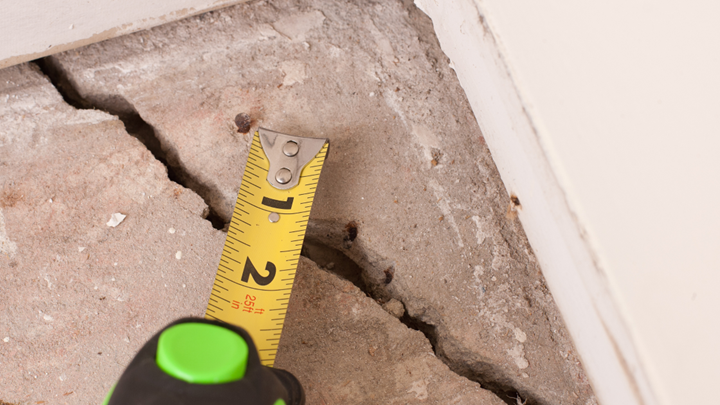
This is probably the most important thing to understand. Seeing a crack tells us that something happened, but the crack by itself doesn’t always tell us what caused it. Concrete can crack as it cures. Foundations can experience normal movement over time. Changes in soil and moisture conditions can also contribute to cracking. Then there are cracks associated with more significant movement. That’s why we don’t like looking at a crack for 30 seconds and immediately telling a homeowner what repair they need. We want to know where the crack is located, which direction it runs, how wide it is, whether one side has moved relative to the other, and whether you’ve noticed it changing. We also look beyond the crack. What is happening with the rest of the wall? Are there other cracks nearby? Are doors sticking upstairs? Are floors changing? Is water entering the basement? Those details help turn a visible symptom into something we can actually evaluate.
What Is Foundation Crack Repair?
In general, crack repair focuses on the crack itself. The exact approach depends on the type of foundation, the condition of the crack, whether moisture is involved, and—most importantly—why the crack developed. That’s an important distinction because simply filling a crack doesn’t necessarily address movement. If the foundation is stable and the crack is primarily allowing moisture through, that’s one situation. If the crack keeps changing because the wall itself is moving, that’s a very different situation. When we consider foundation crack repair in Lenexa, we’re not only asking, “How do we repair this crack?” We’re asking, “What caused this crack, and is that cause still active?” Homeowners deserve an answer to the second question before spending money on the first.
When Does the Foundation Wall Itself Become the Concern?
Sometimes the crack isn’t really the main problem. The wall is. Foundation walls have to withstand pressure from the soil outside the home. Water and changing soil conditions can affect that pressure. Over time, a wall may begin to bow, lean, shift, or develop cracking patterns that indicate movement. Horizontal cracking is one condition we pay attention to. Stair-step cracking in masonry can also deserve a closer look. You might notice that the center of a wall appears farther inward than the top or bottom, or that a crack seems to be getting wider. In those situations, foundation wall repair in Lenexa may involve addressing the stability of the wall rather than simply treating the visible crack. Think of it this way: if a crack is the result of a moving wall, repairing only the crack doesn’t stop the wall from moving.
How Can You Tell Which Problem You Have?
Most homeowners can’t, and we don’t expect you to. There are some things you can watch for, though. Start with change. If you’ve had a small crack for ten years and it looks exactly the same, that’s useful information. If you noticed a crack six months ago and it’s clearly wider today, that’s useful too. You can take a picture and date it. If you’re especially concerned about a particular area, having photos from different points in time can help show whether anything is changing. Also pay attention to the rest of the house. Are doors becoming difficult to close? Have new drywall cracks appeared? Does a floor feel different? Is there moisture around the foundation crack? One symptom doesn’t necessarily mean much by itself. Several changes happening in the same area can give us a better picture of what’s going on.
Water Can Complicate the Situation
Foundation cracks and water often show up in the same conversation. A crack can create a path for moisture to enter a basement, but seeing water at a crack doesn’t automatically mean the wall has a serious structural problem. We still need to ask where the water is coming from. Poor grading, overflowing gutters, downspouts that discharge next to the house, and drainage problems can increase the amount of water around a foundation. Those conditions may need attention regardless of whether the crack itself requires structural work. This is why we try not to separate foundation and water issues too quickly. Sometimes they’re connected. Sometimes they’re two different problems happening in the same place.
What Does Structural Repair Mean?
The term “structural” can make just about any homeowner nervous, but it simply means we’re dealing with a component that plays a role in supporting the home. When structural repair in Lenexa is needed, the solution should be based on what part of the structure is affected and why. That might involve a foundation wall in one house. In another, the concern could involve settlement or framing above the foundation. That’s also why an evaluation needs to go beyond whatever symptom initially caught your attention. For example, a homeowner may call about a crack downstairs but also mention that the floor above has started sagging. That could lead us to look at beams and joists as well. If framing is part of the problem, structural beam repair in Lenexa could become a separate consideration. The point isn’t to turn one problem into five. It’s to make sure we’re looking at the house as a system.
Why Isn’t Filling the Crack Always Enough?
Imagine there’s a crack in a wall because the wall has moved inward. You fill the crack, finish the surface, and everything looks better. But the wall continues moving. Eventually, the crack may return or another symptom may appear because the underlying problem was never addressed. This is where homeowners can end up frustrated. They thought they fixed the problem, but what they actually fixed was the most visible evidence of the problem. That’s why proper foundation crack repair in Lenexa begins with figuring out whether the crack is stable or whether something else needs to be addressed first. Sometimes the simpler repair really is the right answer. We just want to have enough information to know that before recommending it.
What Should You Ask a Foundation Contractor?
Don’t be afraid to ask why. Why did the crack form? Does the contractor believe the wall has moved? Is there evidence that movement is continuing? Is moisture contributing to the problem? What exactly is the proposed repair intended to accomplish? A good foundation repair company in Lenexa should be able to walk you through those questions without burying you in technical language. You should also understand whether the proposed work is meant to repair a crack, stabilize a wall, address water intrusion, correct settlement, or accomplish some combination of those things. Those are not interchangeable goals. If you’re comparing foundation wall repair companies in Lenexa, look closely at the reasoning behind each recommendation instead of comparing price alone. Two proposals that look similar on paper may actually be trying to solve very different problems.
Does Every Foundation Crack Need Immediate Repair?
No. That’s worth saying clearly because homeowners often assume that any visible crack means something is seriously wrong with the house. Some cracks can be relatively minor and stable. Others deserve monitoring. Some may allow water intrusion. And some can be evidence of movement that needs to be addressed. The crack’s appearance is only one piece of the puzzle. If you’re concerned, you don’t need to diagnose it before calling us. Take a picture if you can, make a note of when you first noticed it, and tell us about anything else around the house that seems to have changed. Those details are genuinely helpful.
Let Keystone KC Help You Understand What You’re Seeing
Foundation problems become a lot less intimidating once you understand what’s actually happening. At Keystone KC, our goal isn’t to look at every crack and turn it into a major repair project. We want to determine whether we’re dealing with an isolated crack, moisture intrusion, wall movement, settlement, or another structural concern. When we’re called about foundation crack repair in Lenexa, that’s where we start: figuring out the cause before talking about the solution. If you’ve noticed a new crack, an old crack that’s changing, water entering around a crack, or a foundation wall that doesn’t look quite right, let us take a look. We’ll explain what we’re seeing, what it means for your home, and what options make sense from there.
If something feels off with your home, reach out to us online and schedule a free estimate at Keystone KC, or give us a call at (816) 287-1696. We’ve been fixing homes across the Kansas City area for decades.
We get it, foundation problems can be scary. Cracks in the walls, doors that won’t shut, water creeping into the basement… it’s a lot. But you don’t have to figure it out alone. We’re a local team that shows up, tells you the truth, and gets the job done right. We’re here to help, no pressure, just real answers.


